Build
Landholder Connect
A land access register built on the land title, for teams that run legally consequential records on spreadsheets and email.
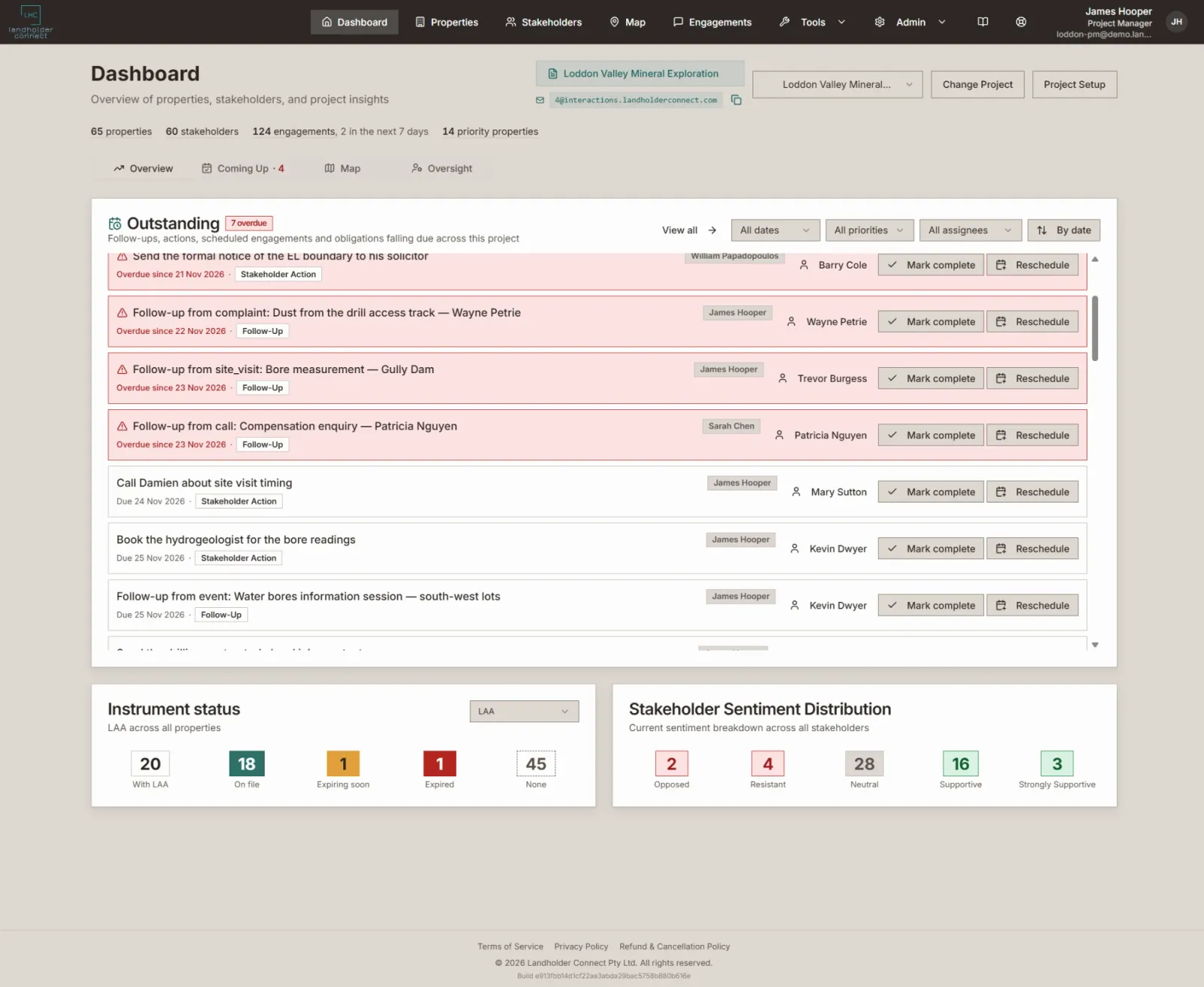
All screenshots are from the Landholder Connect demonstration project. No real landholder or client data is shown.
The problem
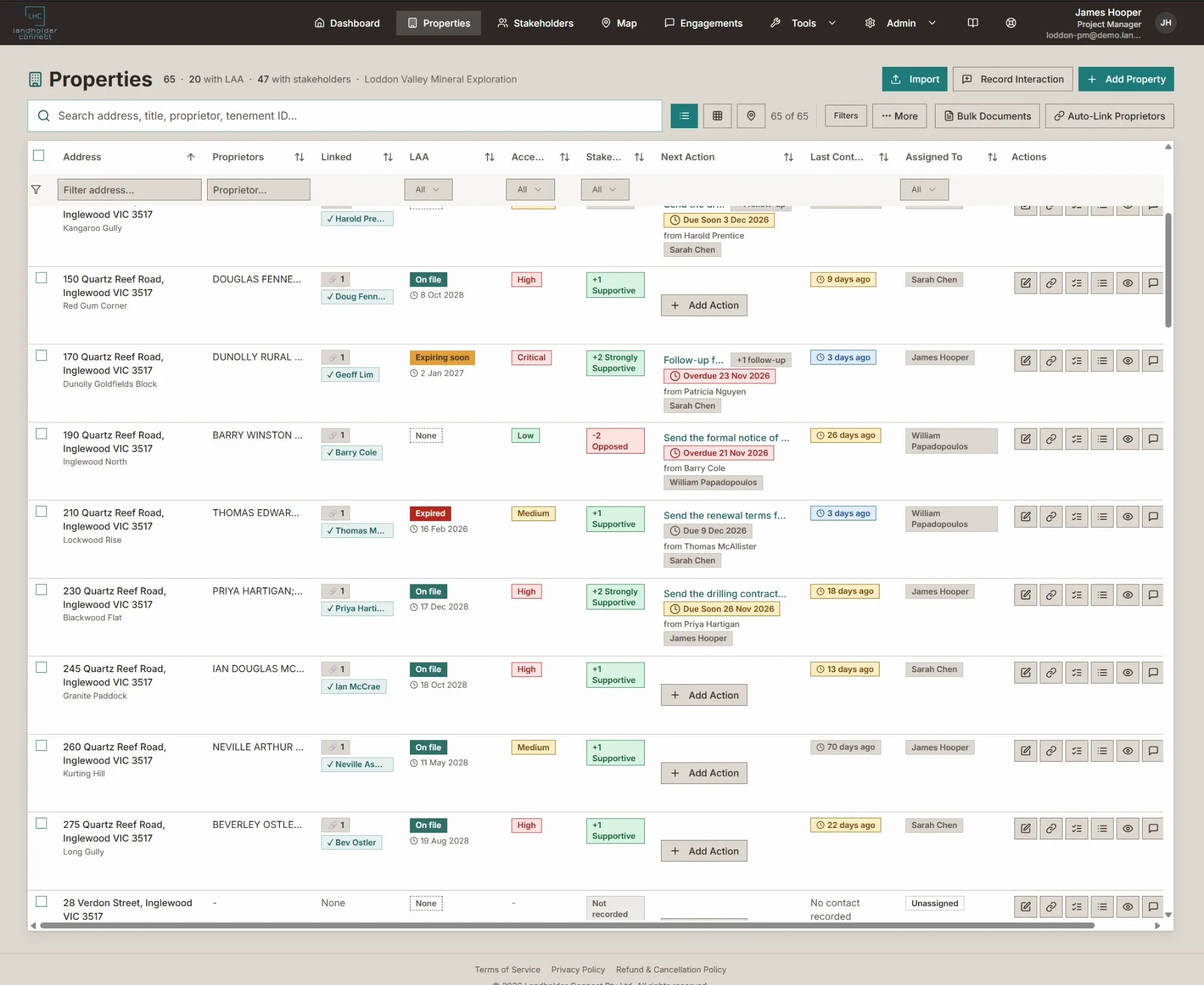
Land access teams on mining, energy and infrastructure projects keep records that matter: who owns each parcel, who was spoken to, and what was promised. Most of those teams run on spreadsheets, email and shared drives. The only step up has been an enterprise stakeholder system that costs too much and takes too long to learn for a small team.
Spreadsheets fail in quiet ways:
- Rows drift. In a spreadsheet, identity is position. As a project grows, values land a row off, and nobody notices until it matters.
- One fact, forty copies. A landholder’s phone number lives in every row that mentions them, so a change is forty edits or a silent inconsistency.
- Promises aren’t tracked against the land. Who promised what, on which property, by when, sits in notes and inboxes.
- Tools are built around people, not property. Stakeholder-first systems treat land as a data point until a negotiation starts. Then everything has to reorganise around the parcel.
Why I built it
I came to this from the work itself: first-hand land access practice, and years of dealing with land access records. I could see what teams needed, and I could see why the existing options didn’t fit them.
The real competitor turned out to be the spreadsheet. Teams trust spreadsheets because they can see their own mistakes. So every feature had to answer one question: does it beat the spreadsheet for this job? And the product had to be property-first: a register of parcels, with people and promises attached.
How I built it
The product reached its current shape by building broadly, then cutting hard.
- A practitioner’s pain. It began with the daily work: properties, landholders and promises kept across spreadsheets and inboxes.
- A broad prototype. An AI-built prototype tested the idea quickly and produced a backlog of thousands of ideas.
- Review and rebuild. An independent engineering review in July 2026 led to a rebuild over forty days and 360 pull requests: data separated between customers by design, every change made as a reviewed, tested unit, and features kept only where they earned their place.
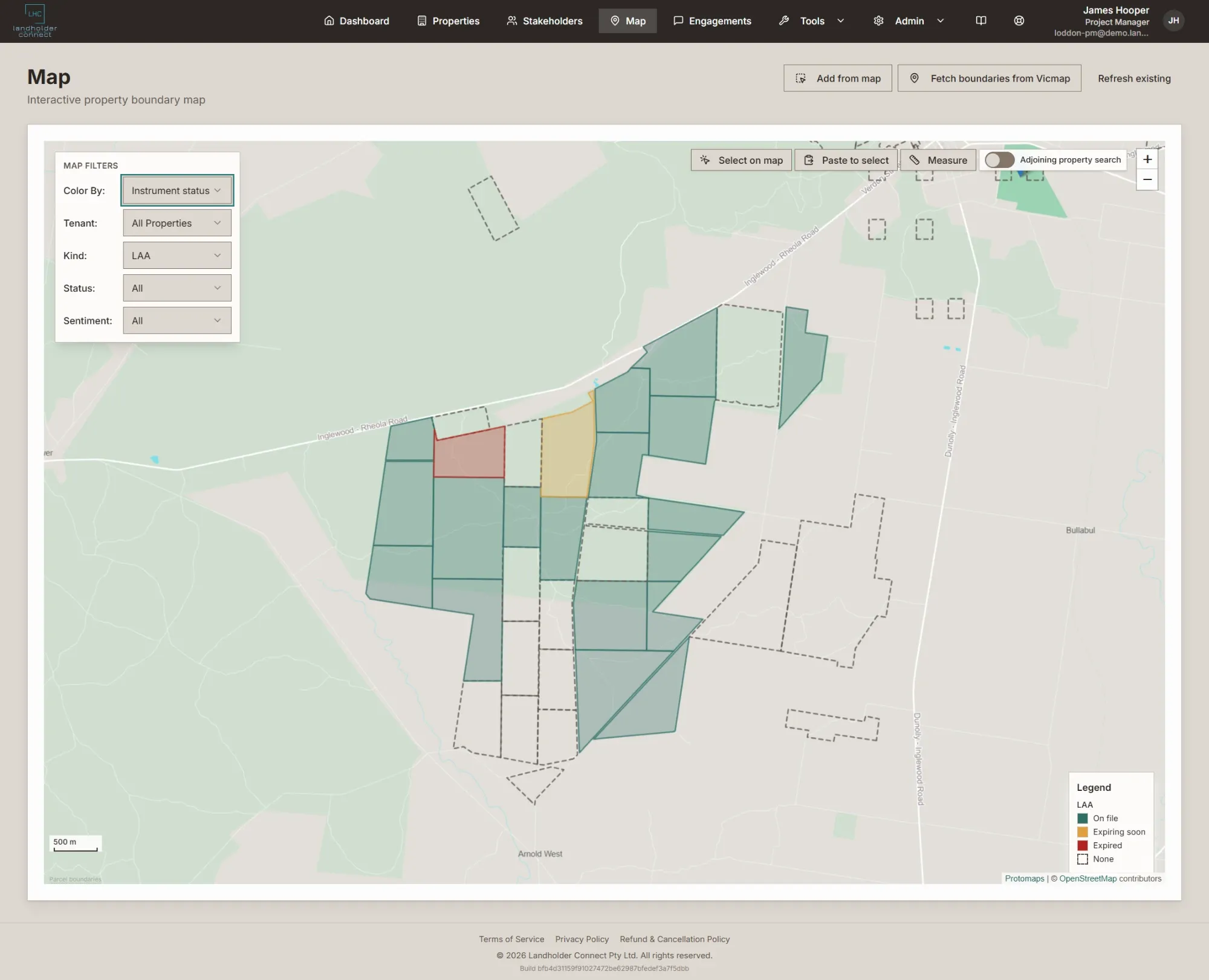
- A settled product. A focused register with clear product rules, multi-state title and map support, and a management layer over the records.
I lead the product and use AI as the engineering team. One AI session acts as architect and reviewer: it reads the code and issues, writes a brief for each job, and reviews what comes back. Separate AI coding sessions build each job as one reviewed change. Automated checks guard the rules that matter, such as keeping each customer’s data separate. I make every product call, and nothing merges until every check passes.
That has added up to more than 700 reviewed, tested changes and more than 1,400 tracked issues. About one in fourteen of those issues was closed as deliberately not built.
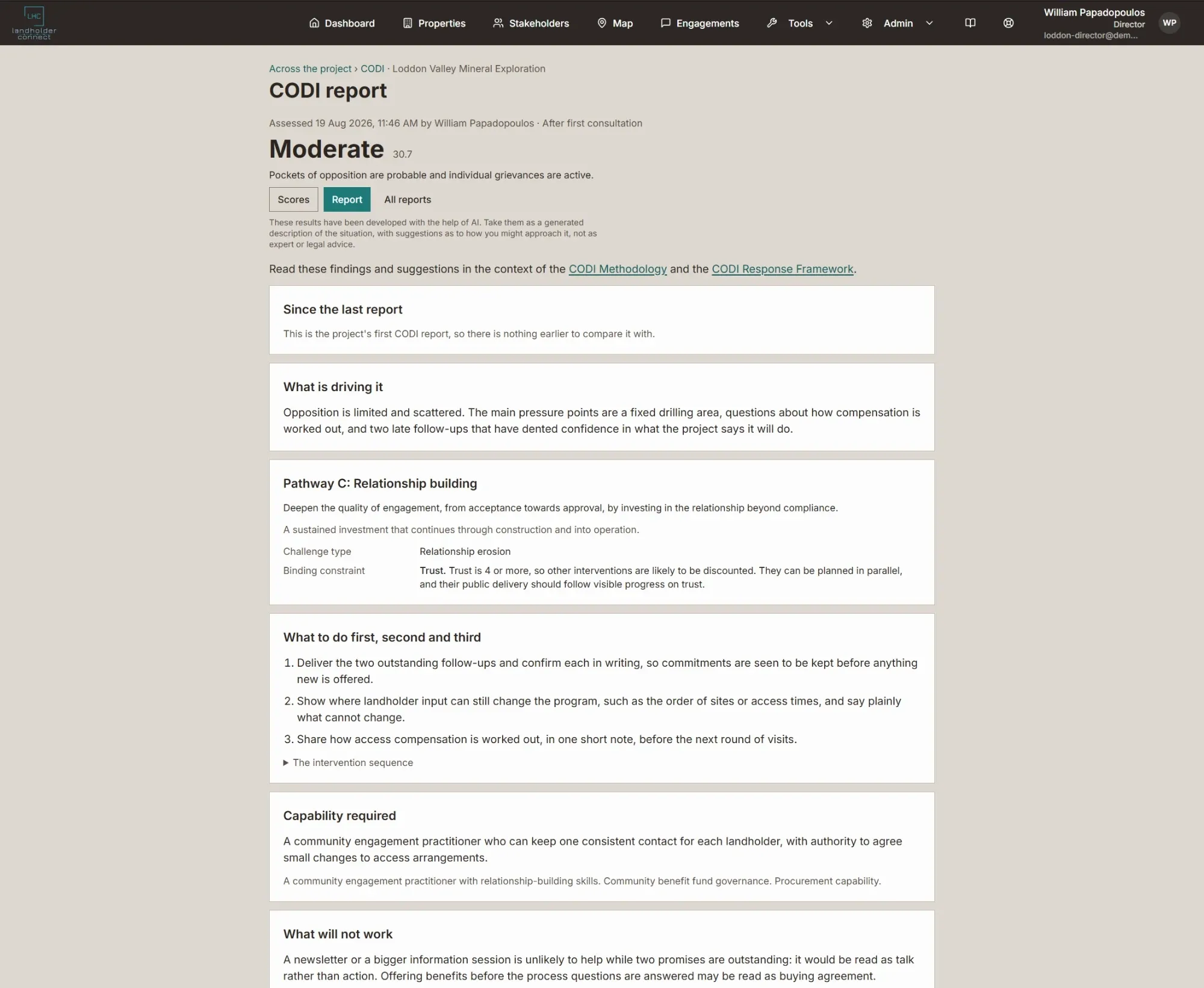
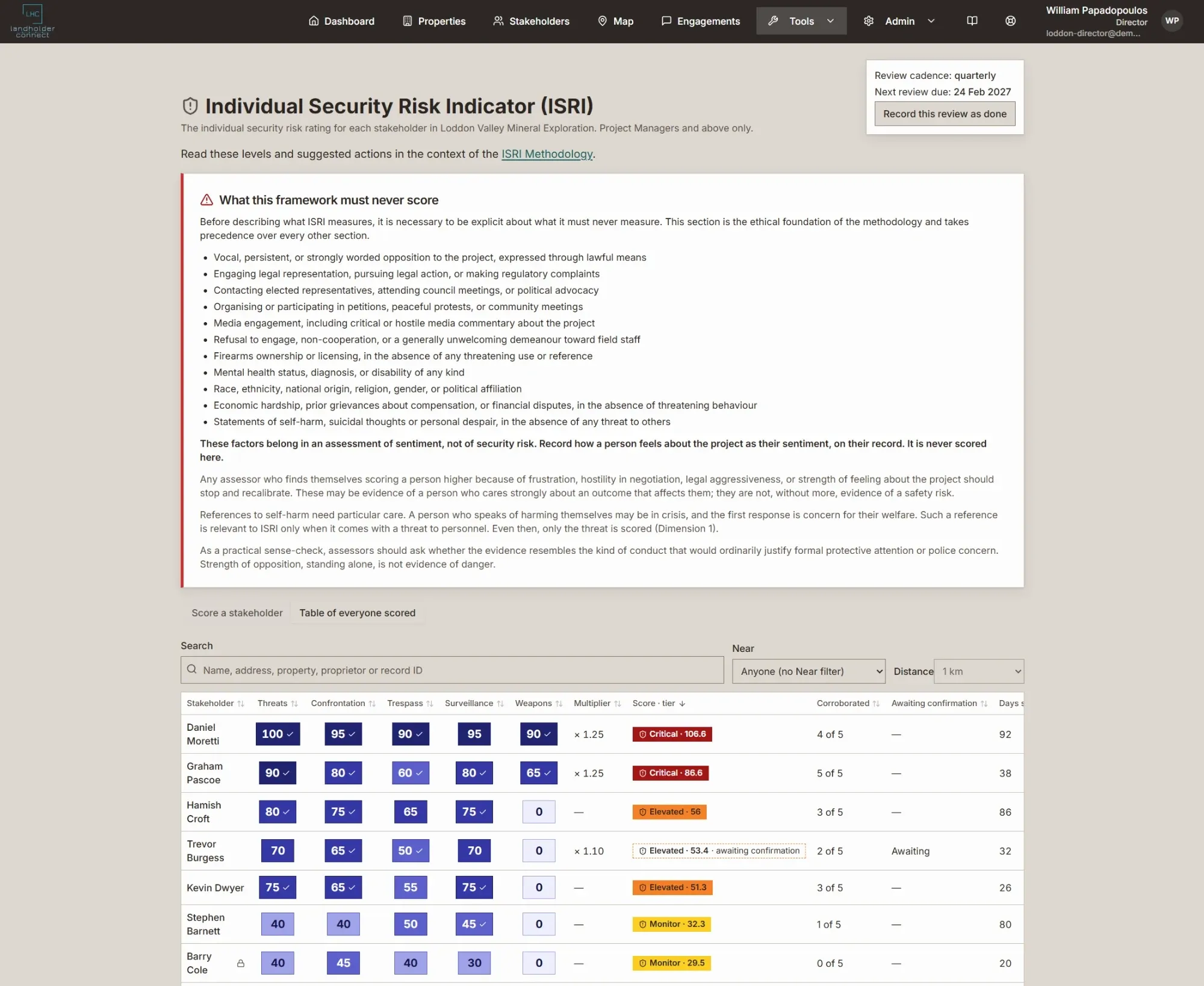
New features are shown first as clickable mock-ups, then run as working prototypes on a staging site, switched off until they’re ready. The two risk-rating methods built into the product went from first prototype to production in four days: CODI, which rates organised community opposition from a project’s engagement records, and ISRI, which rates the security risk an individual’s recorded statements suggest, with lawful opposition always scoring zero. Each method is published as a paper.
The controls matter more than the speed:
- Understand before merging. Every fix starts with four lines: what’s wrong, how it works now, the fix, and how it will work after. Nothing ships that I can’t explain.
- Evidence, not prose. AI reports can be confident and wrong, so every change has to show its commands and raw output.
- AI features are tested like products. Each prompt or model change runs against a fixed test set and is marked by three reviewers.
- AI proposes, a person commits. Nothing AI suggests is written without a person choosing it.
What it’s built with
- Language: TypeScript, in the browser and on the server.
- Front end: React and Vite, installable as a web app. Maps use Leaflet with a self-hosted Protomaps base map, so there’s no paid map service.
- Back end: Node.js and Express.
- Database: PostgreSQL on Neon, through the Drizzle ORM. Every customer row carries its organisation and project, and every query filters by both.
- Hosting: Fly.io in Sydney, behind Cloudflare. Files and email run on Amazon S3 and SES, also in Sydney.
- AI: Anthropic’s Claude models through Amazon Bedrock. The app refuses to run AI unless the models run in Australia.
- Land data: official parcel boundaries from five state cadastre services, and mining titles from six states.
- Billing: Stripe.
What I learned
- The scarce thing is judgement. AI can write code faster than anyone can judge it. Most of my working rules exist to protect judgement: a person decides, decisions are written where they’ll be found, and features are judged by using them.
- With AI, building is not the bottleneck. Deciding what not to build is. I retired features that worked, including an AI search and a payment calculator, because they cost more trust or upkeep than they returned.
- “Would this benefit users?” always says yes. Better questions: would anyone notice if it were gone? Could a user, mid-job, wish for it from something already on screen? Would a buyer expect it?
- Use it for real. Importing real parcels and trying to do a day’s work turned up eight defects in one afternoon. Almost none could have been found by reading the code, because the code agreed with itself.
- Legibility wins trust. Imports and merges show exactly what will change before anything is written, because that’s what made spreadsheets trustworthy in the first place.
- A working prototype proves a design is feasible, not that anyone wants it. New features ship switched off, and demand is tested with buyers, not assumed from how fast something was built.
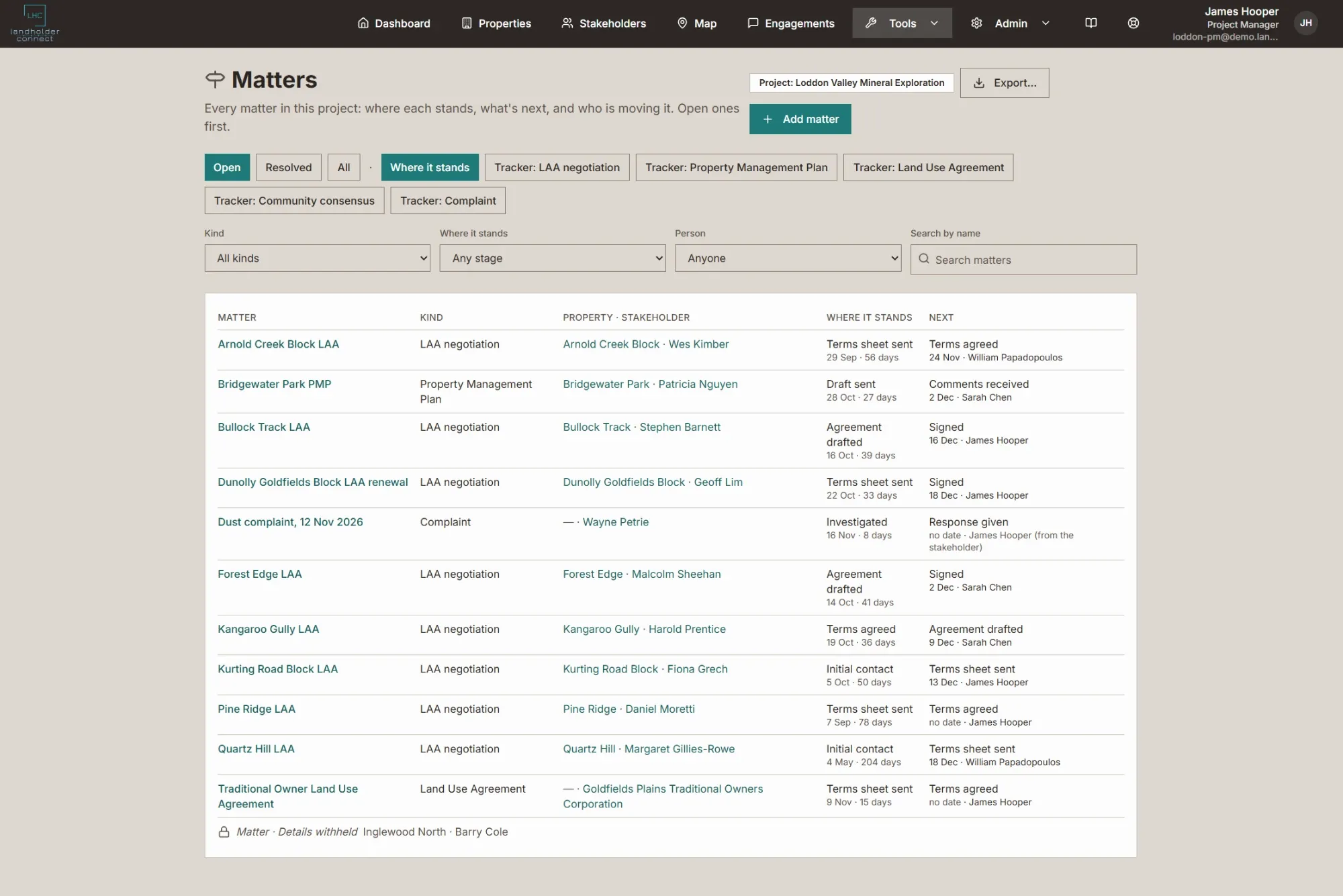
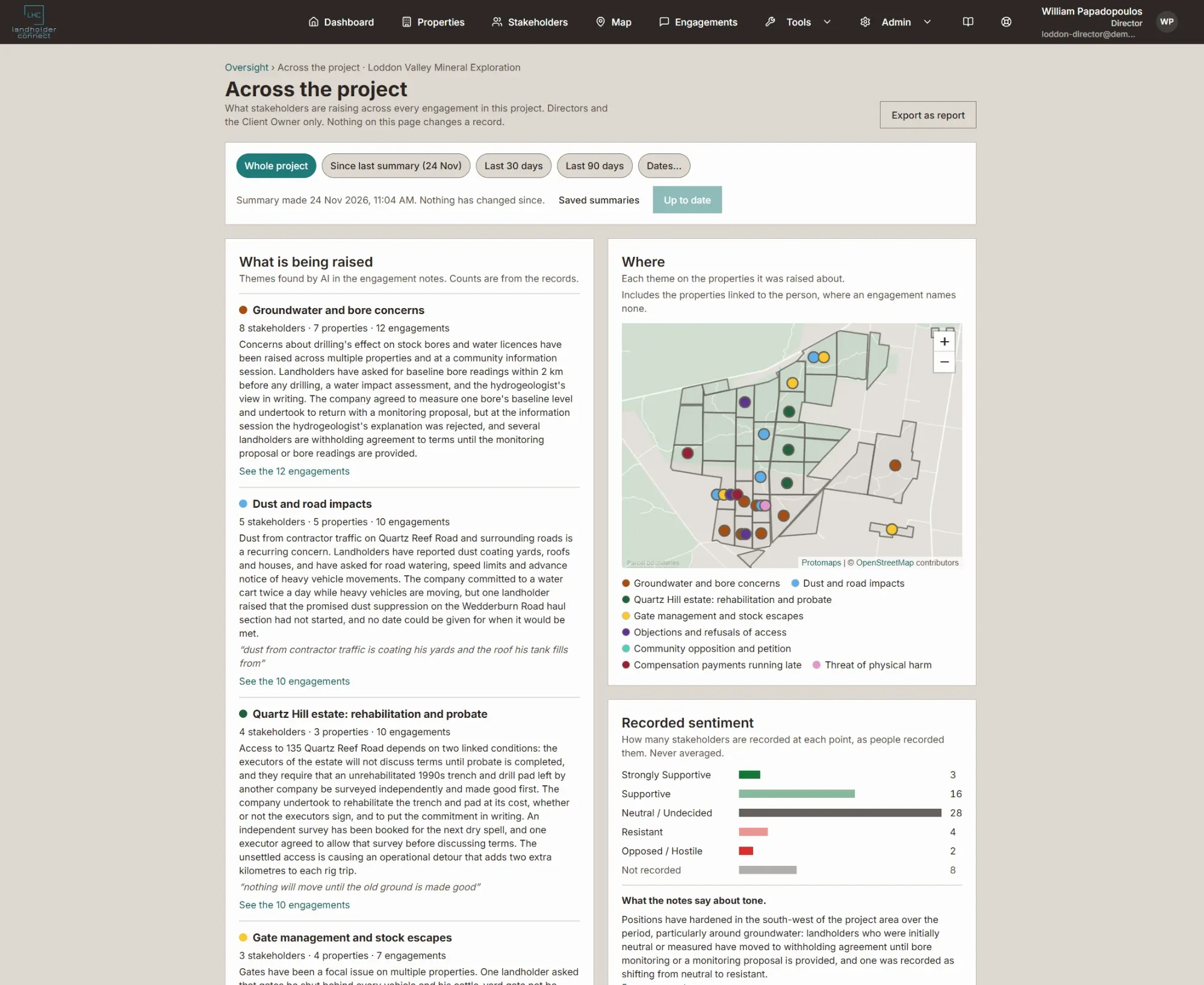
- Buyers buy the management layer. In demonstrations the strongest reactions are to the views that sit over the records: where each matter stands, and what stakeholders are raising across a project. The records are the proof, not the pitch.
Features, pricing and demos are on the Landholder Connect site, and news is on its LinkedIn page.